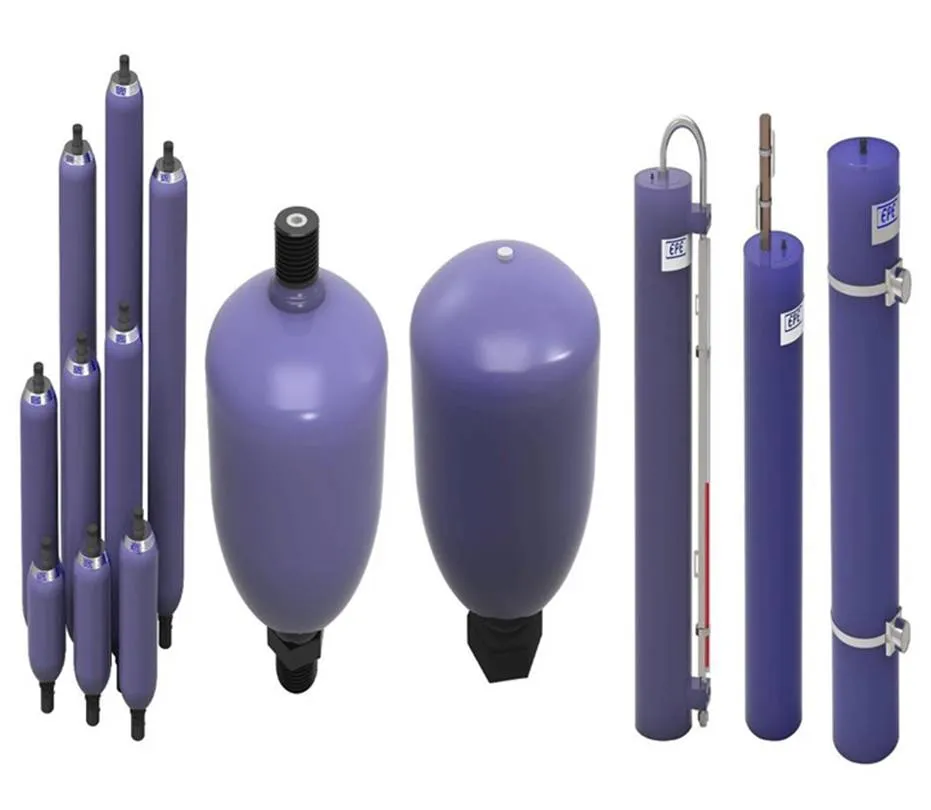
We represent EPE bladder, piston and diaphragm accumulators in Türkiye. We size the accumulator, build its stand, and complete nitrogen charging and commissioning on site.
A hydraulic accumulator is a pressure vessel that stores oil under pressure against a nitrogen gas cushion. It covers flow peaks the pump cannot meet, damps pressure pulsation and shock, and feeds the system when the pump stops.
Energy storage and peak flow supply
Emergency energy: hatch, door and brake movement on power loss
Shock and vibration damping
Leakage and thermal expansion compensation
Pressure holding
02
Bladder, piston or diaphragm?
Bladder accumulators respond fast and are the first choice for most general applications. Piston accumulators are used for large volumes, high pressures and high pressure ratios, and together with additional nitrogen bottles. Diaphragm accumulators are small, compact and light, suited to shock damping and pilot circuits.
We make the selection together from the working pressure range, the oil volume required, the cycle time and the temperature.
03
Accumulator stands and stations
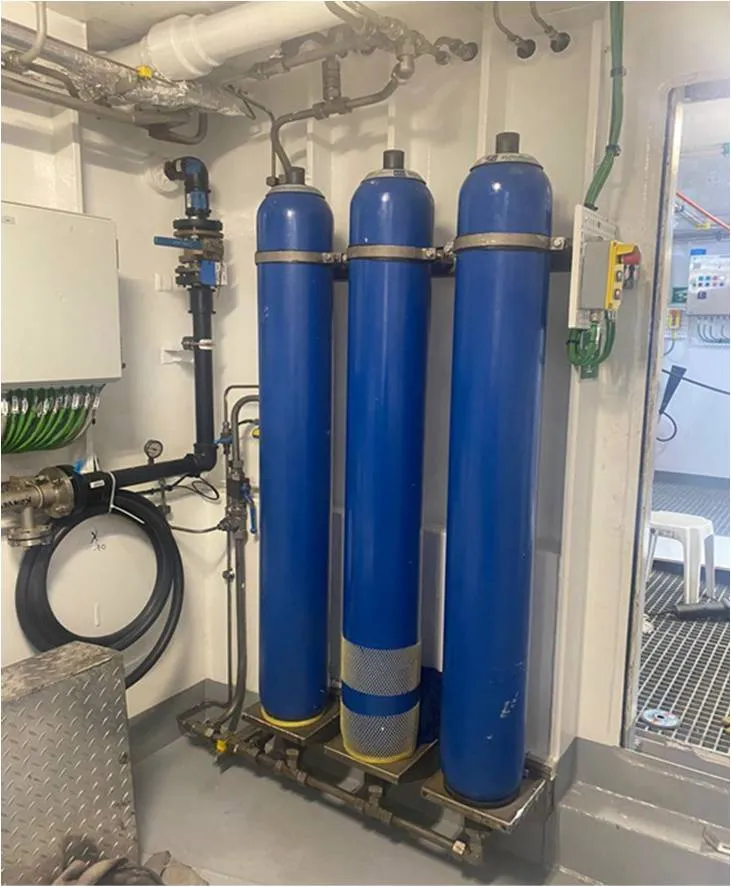
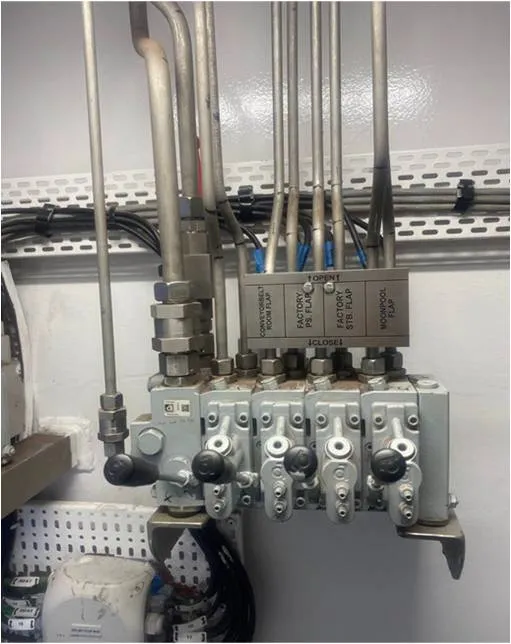
We can deliver the accumulator as a working station, not just a vessel: support stand, safety blocks, manifold piping, nitrogen bottles and pressure monitoring. This is how we built the accumulator stations for emergency closing door systems on vessels.
04
Nitrogen charging and periodic checks
Pre-charge pressure directly affects accumulator efficiency and bladder life. We charge with nitrogen at commissioning, measure the pre-charge at periodic checks, and replace bladders and seals when needed.
NoteAccumulators are pressure vessels. Charge with nitrogen only; always relieve the fluid-side pressure before any dismantling or maintenance.
02From the workshop and the field
03Frequently asked
Questions, answers.
Which type of hydraulic accumulator should I choose?
For general energy storage and shock damping a bladder accumulator is usually right. Piston accumulators suit large volumes and high pressures; diaphragm accumulators suit small, compact applications. Send us your working pressures and required volume and we will do the sizing.
What should the pre-charge pressure be?
It depends on the application: for energy storage it is usually set slightly below the minimum working pressure, for shock damping at a fraction of the working pressure. The right value is calculated from the manufacturer’s data and the operating temperature.
Do you supply stainless steel accumulators?
Yes. EPE accumulators are available with carbon steel and stainless steel shells; we offer stainless solutions for marine and corrosive environments.
Do you build accumulator stands?
Yes. From single accumulators to multi-accumulator and nitrogen bottle stations, we build and commission them complete with stand, manifold and safety equipment.
A cylinder size, a power unit capacity or a piping job on board: tell us what you need and our engineering team will come back with a technical solution and a quote.